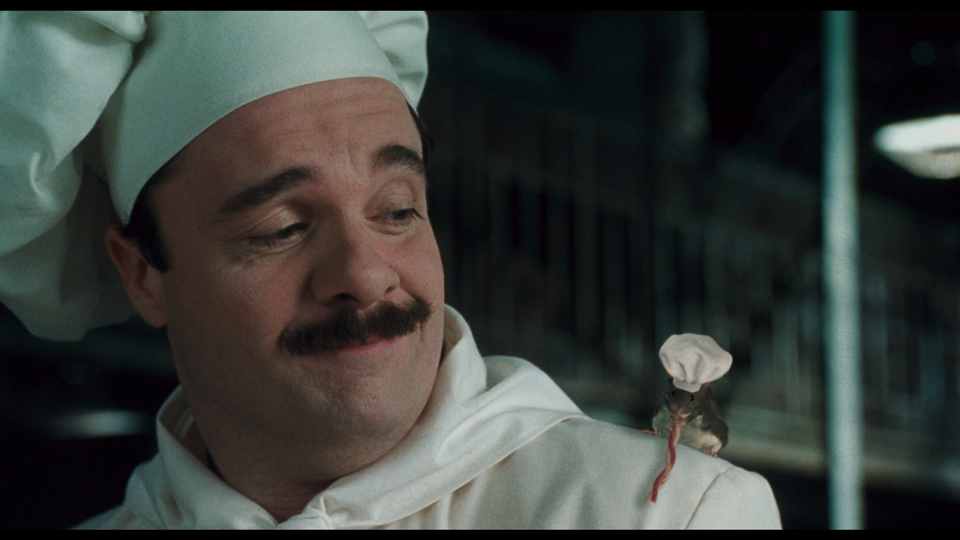
It’s always a joyous occasion when a classic film is restored in high definition; it’s like experiencing it for the very first time. And with advances in technology, these timeless films have never looked better. Victor Fleming’s landmark epic Gone with the Wind has been beautifully remastered and released for the first time on 4K UHD.
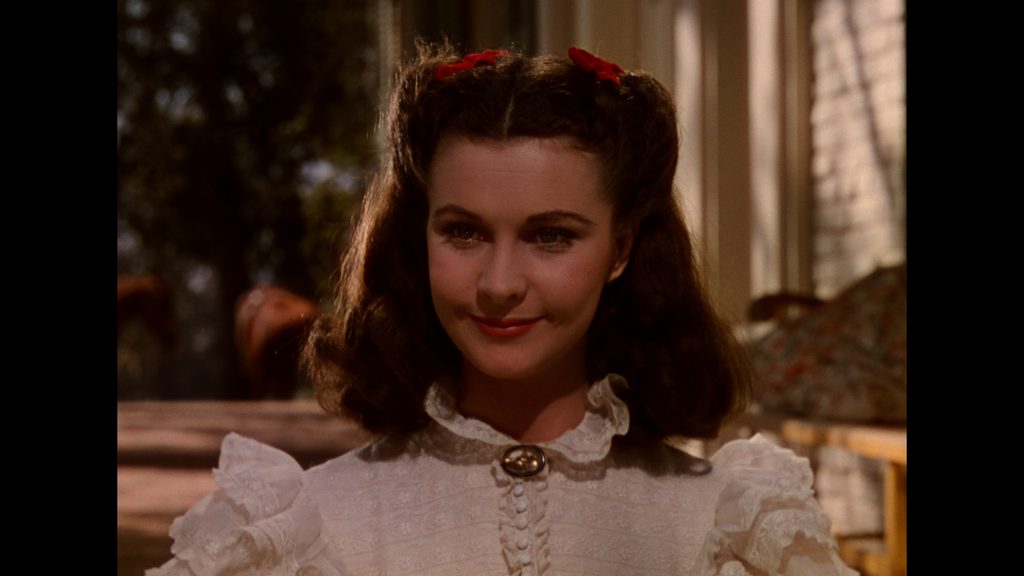
Image © 1939 Warner Bros. Entertainment Inc. All rights reserved.

Based on Margaret Mitchell’s novel and adapted for the screen by Sidney Howard, Gone with the Wind is a trailblazing cinematic achievement that remains one of the greatest and most important films in American history. It won over 10 Academy Awards (the most ever awarded to a single film at the time) and set the record for the highest-grossing film. Its cultural impact and historical legacy made it one of the first films inducted into the National Film Registry in 1989.

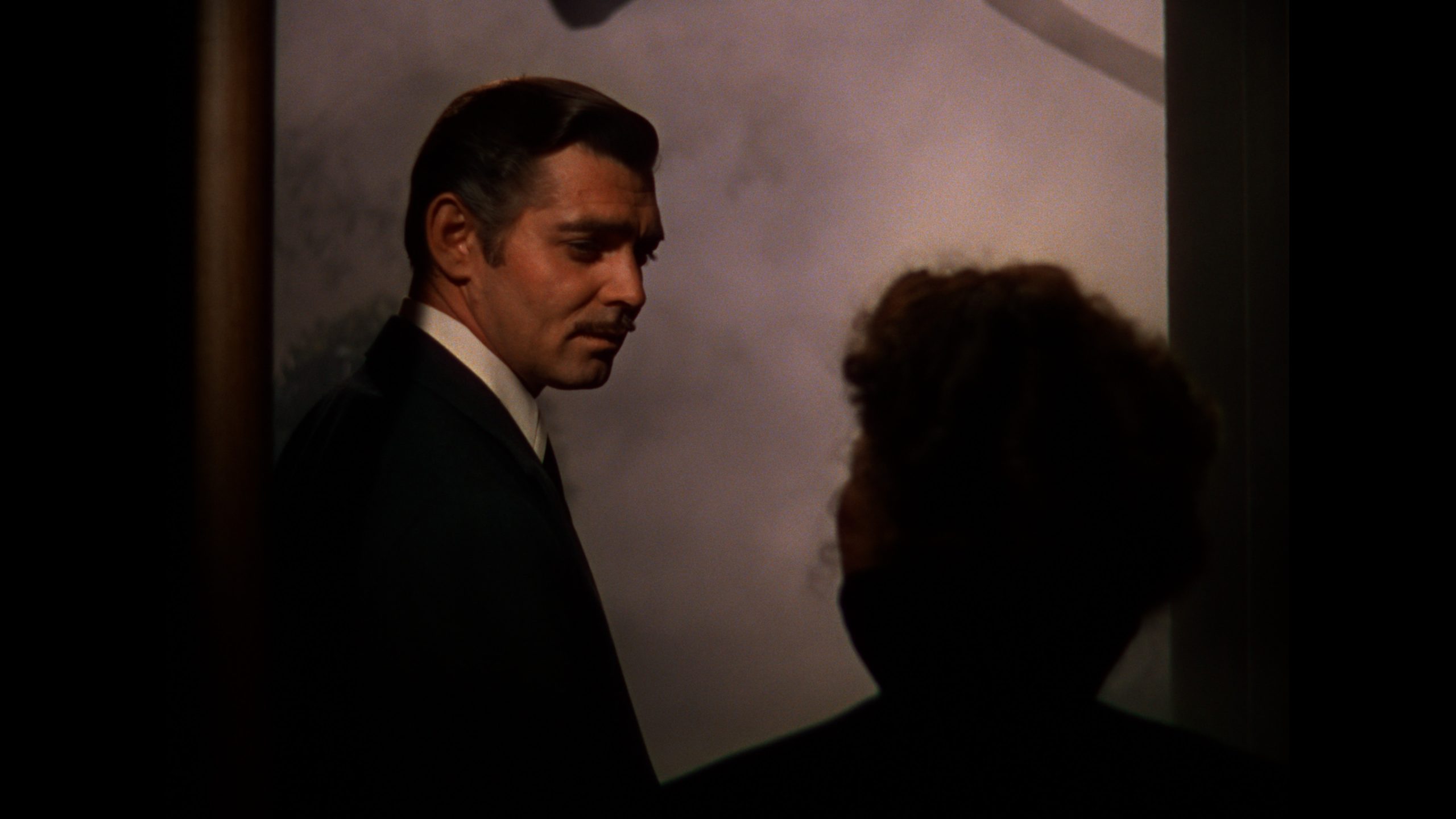
Set during the American Civil War and its subsequent Reconstruction period, the film follows the life of Southern belle Scarlett O’Hara (Vivien Leigh), the stubborn but resilient daughter of a Georgia plantation owner, as she strives to restore her family’s former glory and navigates a turbulent romance with the charming but cynical blockade runner Rhett Butler (Clark Gable).
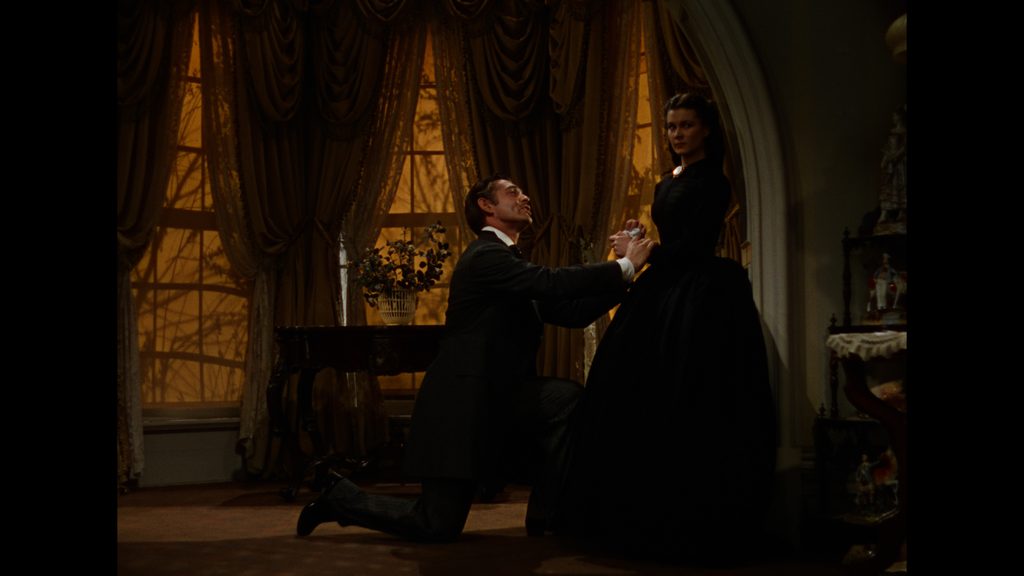
Image © 1939 Warner Bros. Entertainment Inc. All rights reserved.

The on-screen chemistry between Vivien Leigh and Clark Gable is the beating heart of the movie, and both deliver powerhouse performances. Scarlett and Rhett are far from perfect, which makes their complicated relationship so captivating. Despite all their trials and tribulations, you want things to work out for them simply because Leigh and Gable are so irresistible. Even amid the sourness, there’s a tender sweetness which makes you yearn for a happy ending for the two of them, regardless of the inevitable.
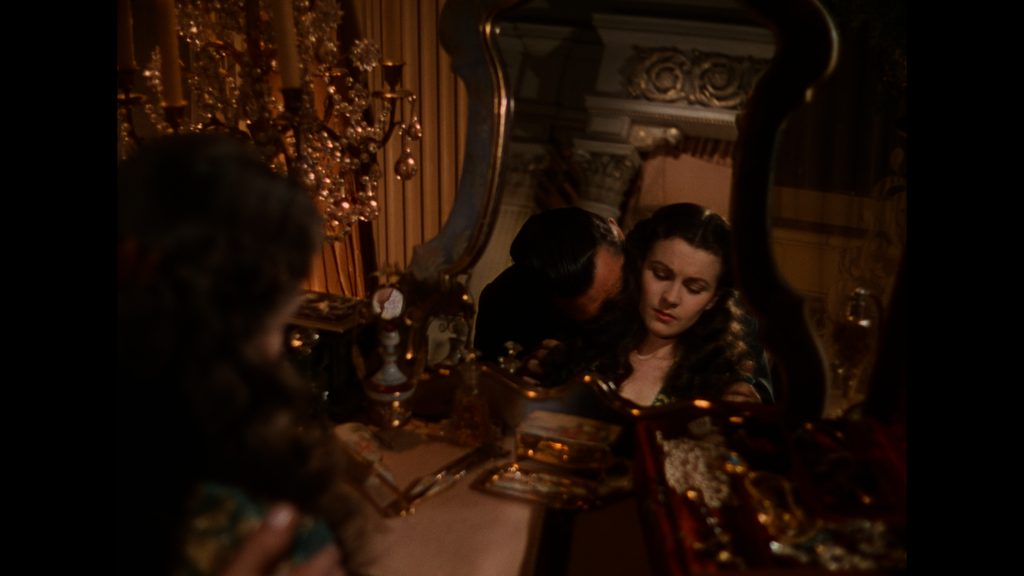
Image © 1939 Warner Bros. Entertainment Inc. All rights reserved.

Without a doubt, the film’s breakout performance is Hattie McDaniel as Mammy. McDaniel broke the glass ceiling by becoming the first African American woman to win an Academy Award, and after watching, it’s not difficult to see why she took home that prestigious honor. It’s easy to shrug off her character as a dated stereotype, and while that criticism has merit, there is no denying that McDaniel brings emotional depth and compassion to the role. Her passion and dedication to giving her all yield astonishing results and one of the most memorable character performances in film history.
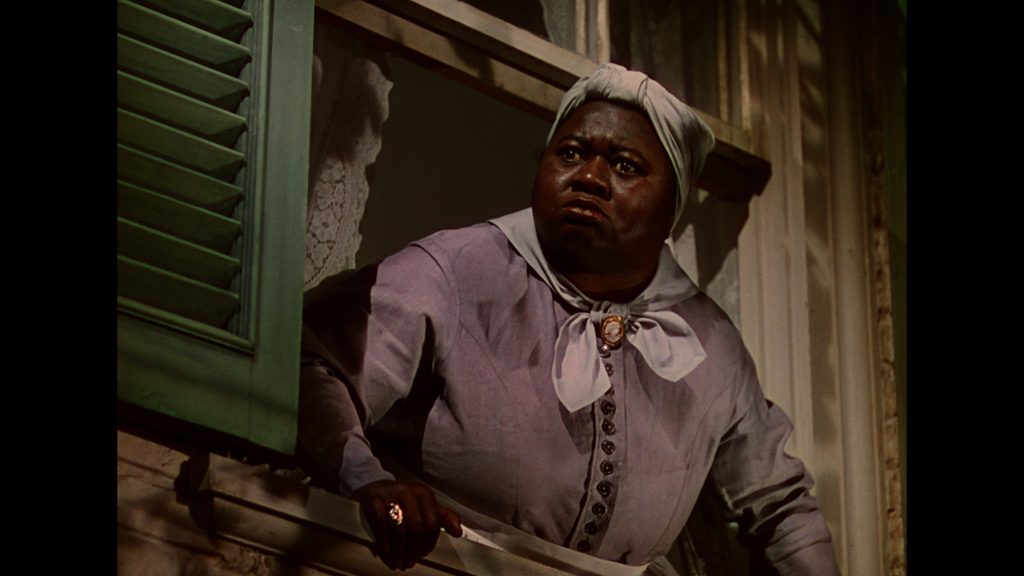
Image © 1939 Warner Bros. Entertainment Inc. All rights reserved.

Packaging – 4/5

This edition of Gone with the Wind comes in a standard amaray 4K UHD case with a flip tray holding three discs. The first pressing includes an O-ring slipcover. A digital copy code pamphlet is included.
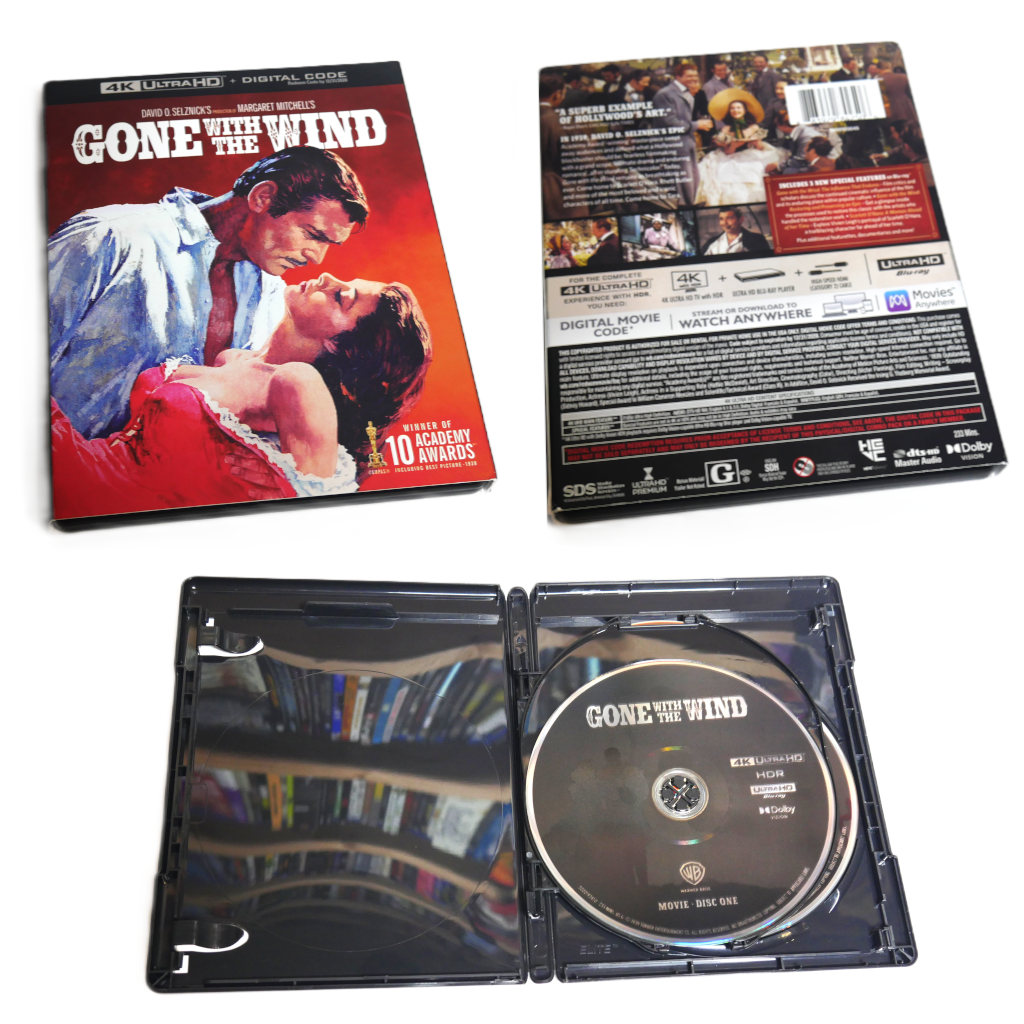
The cover art improves the uninspired artwork used on both the 70th and 75th Blu-ray editions, using the artwork for the 1967 re-release poster featuring Rhett Butler embracing Scarlett O’Hara. It’s an iconic, striking piece that combines simplified design with a retro throwback.

Video Quality – 5/5

The film was scanned in 8K for preservation and archival purposes, while the new restoration and color timing were completed in 4K for this release, breathing new life into Ernest Haller’s magnificent cinematography.
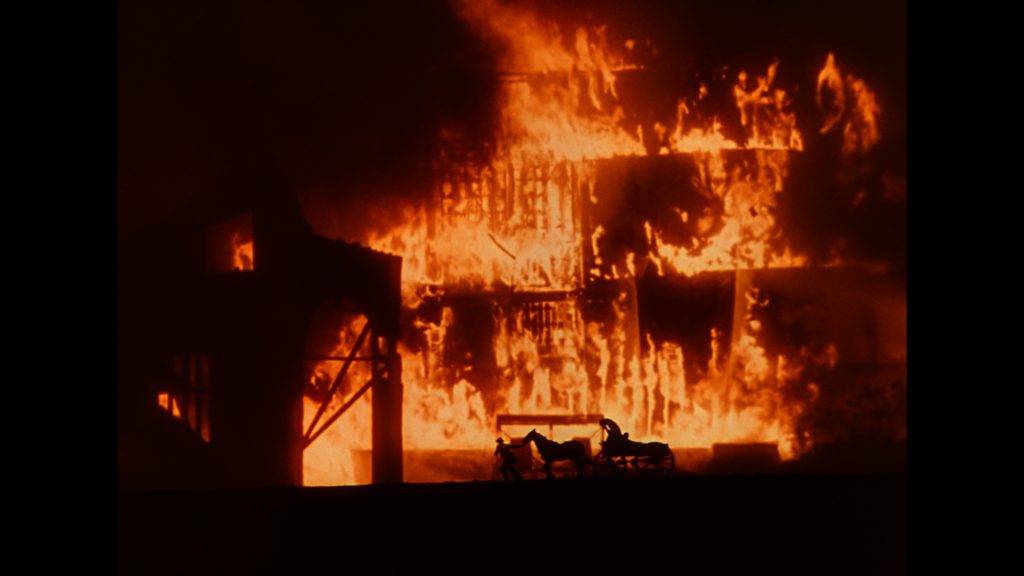
Image © 1939 Warner Bros. Entertainment Inc. All rights reserved.

Fine details are preserved, at least to my eye. Unlike its past Blu-ray release, the film is split across two 100-gigabyte 4K UHD discs, maximizing video quality and offering a superior viewing experience.

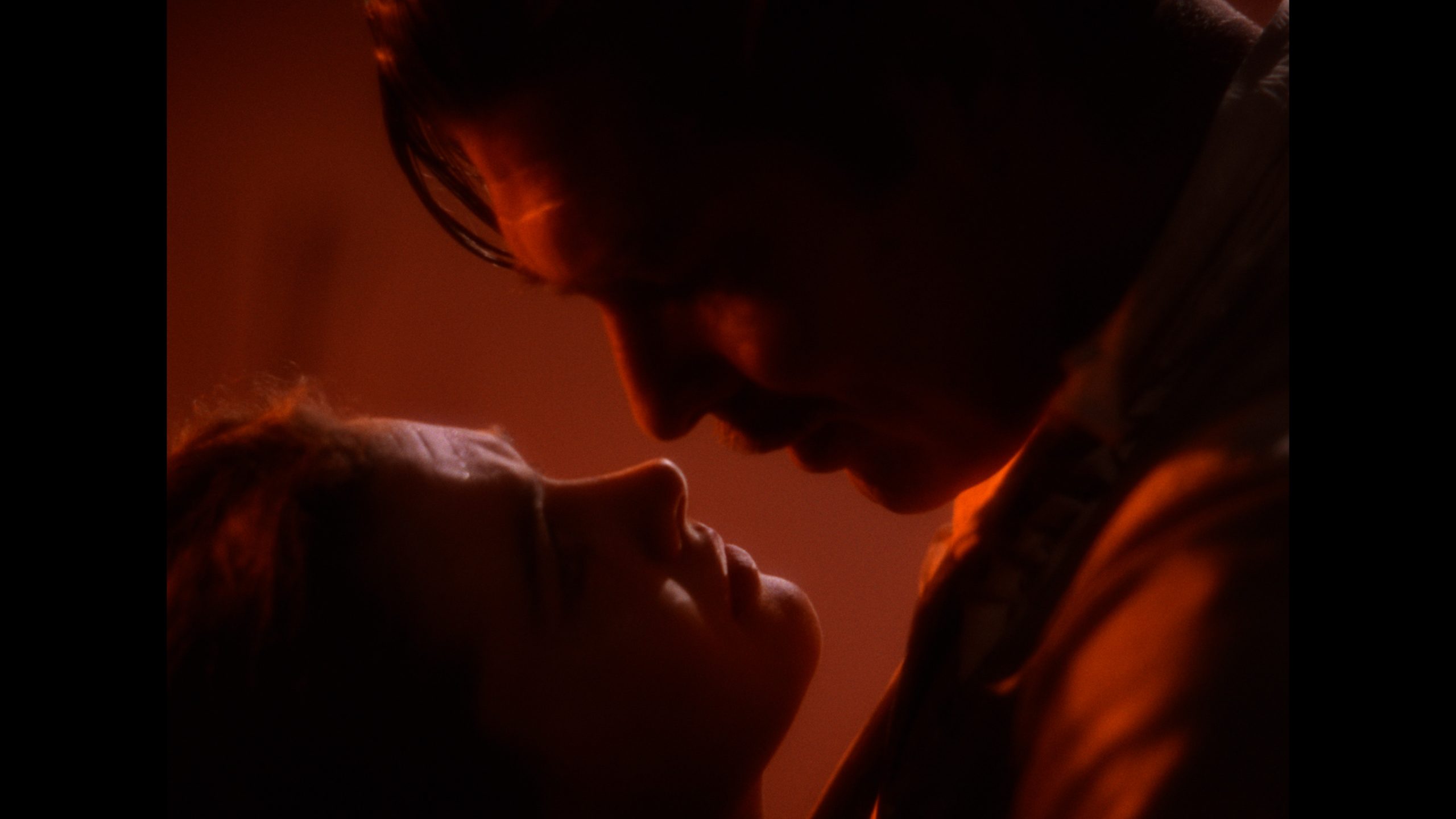
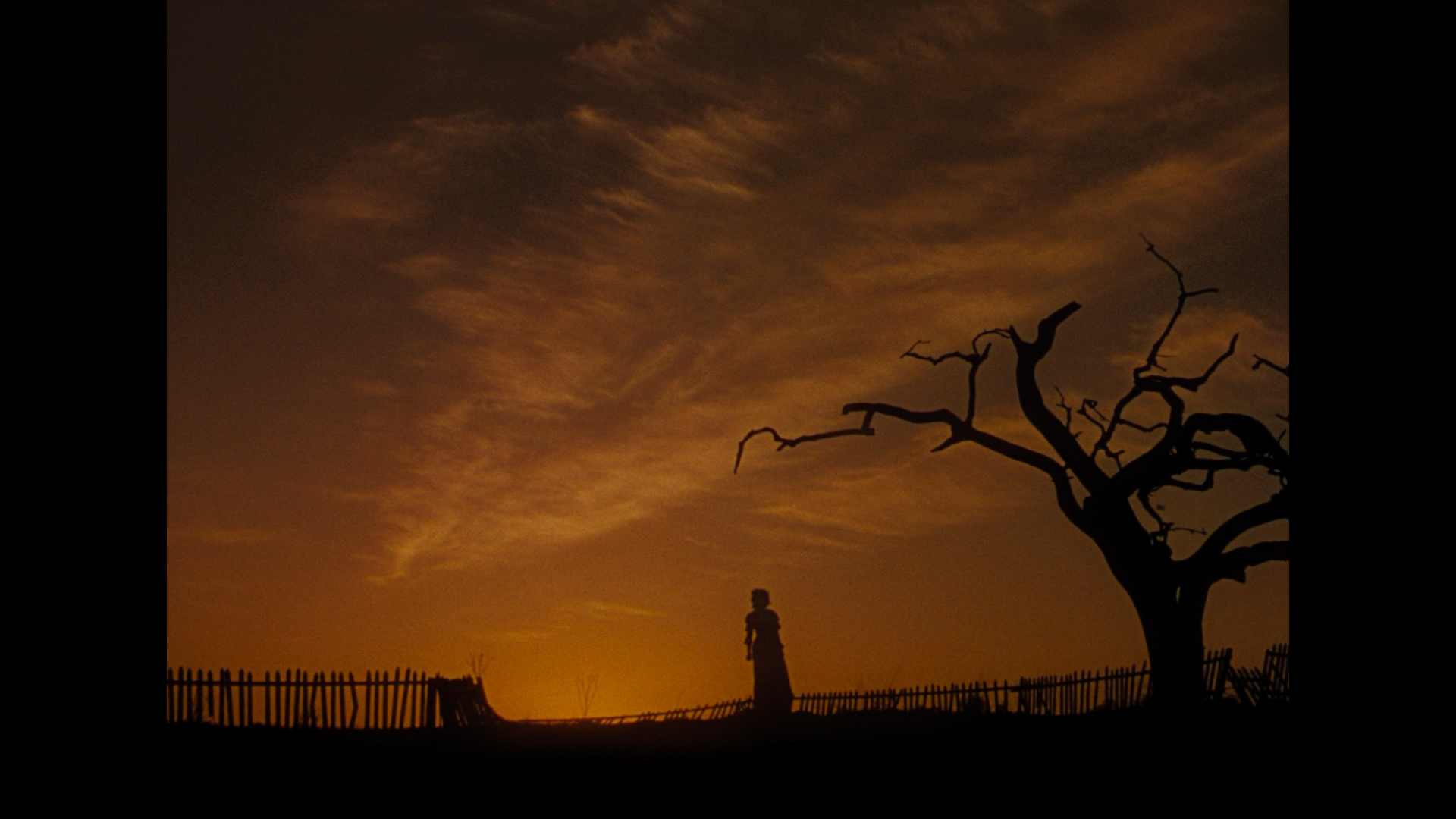
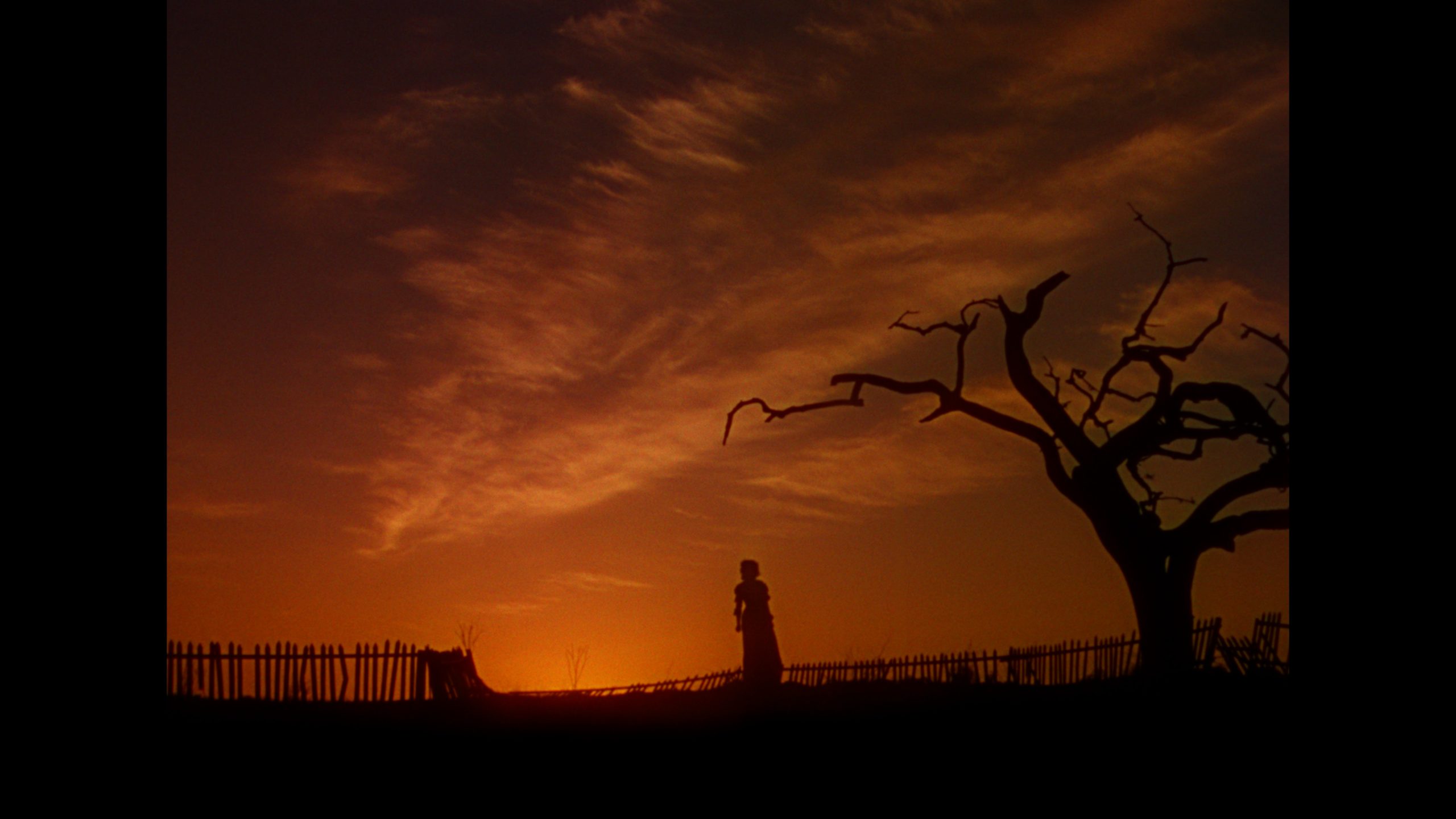
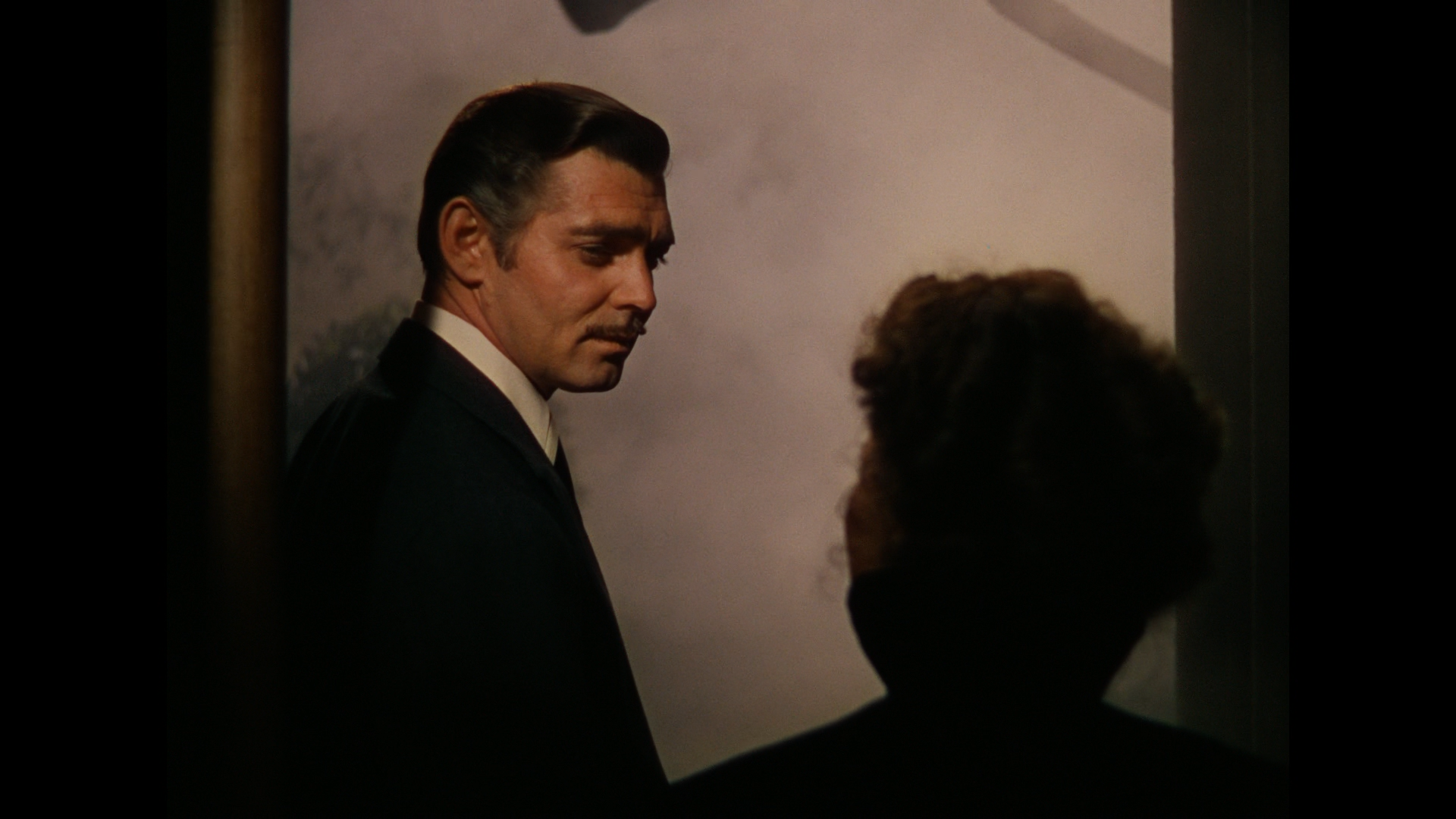
Technicolor and HDR are a match made in heaven, and Gone with the Wind does not disappoint. Through Dolby Vision, the colors are eye-popping, with some of the film’s most iconic shots, including fiery sunsets and Scarlett’s green dress, lighting up the screen.

The 4K screenshots do not accurately represent the HDR and should only be considered for comparing detail and aspect ratio improvements.
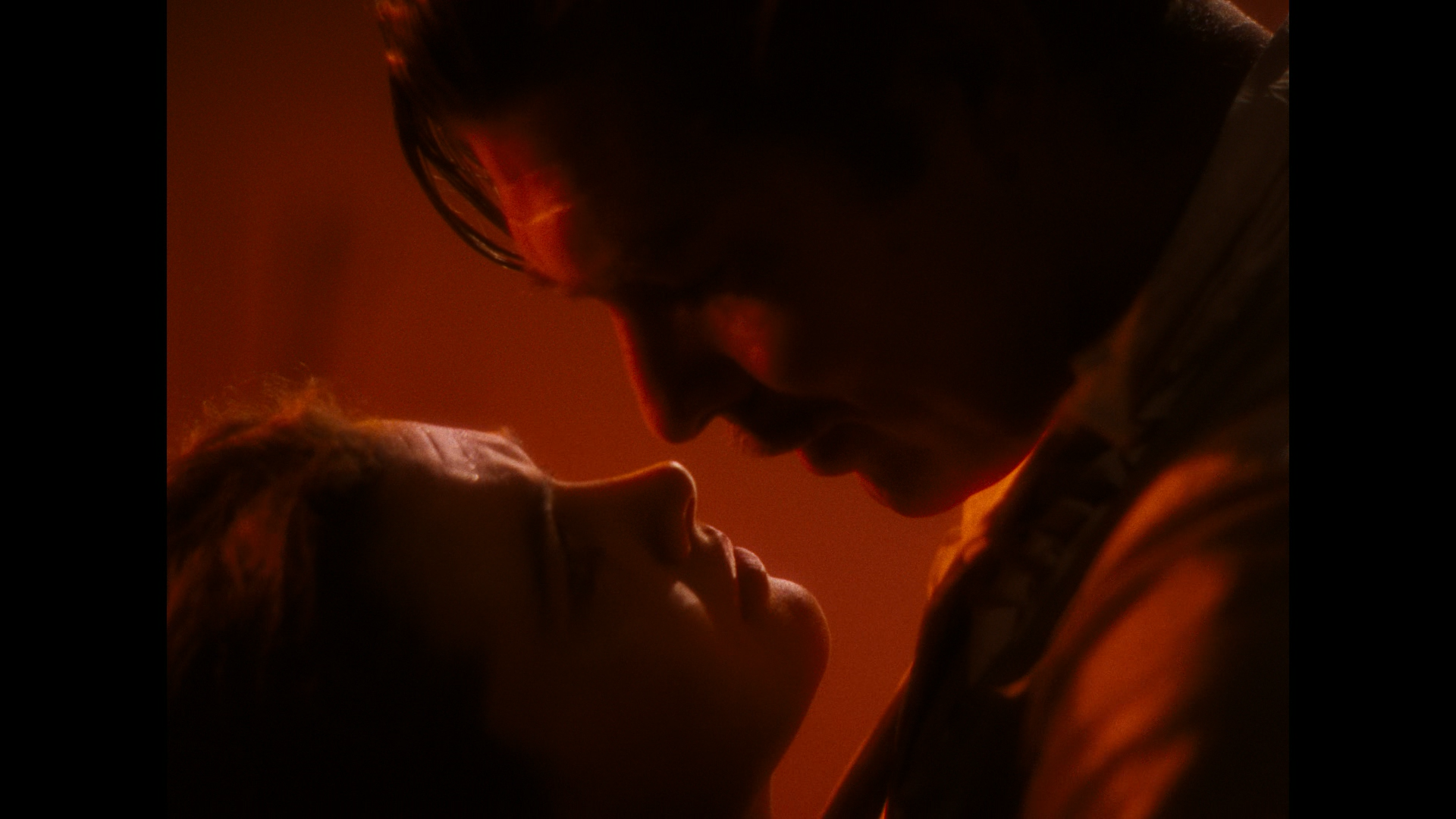
Audio Quality – 5/5

This release offers two incredible audio tracks: remastered DTS-Master Audio 5.1 surround sound and the film’s original mono soundtrack.

Max Steiner’s iconic score sounds better than ever, with its grandeur greatly enhanced by immersive surround sound and reference-quality audio for the authentic theatrical mono.

Both options are exceptional, but for the true 1939 experience, mono is the way to go.

Spanish, French, German, Italian, and Polish dubs are also included, along with subtitles in English, Spanish, French, German, Dutch, Japanese, Korean, Danish, Norwegian, Finnish, Polish, and Swedish.

Special Features 4.5/5

This 4K release includes both archival and newly produced special features, all of which, aside from the audio commentary, are allocated to their own dedicated Blu-ray disc.

Audio Commentary by Historian Rudy Behlmer – an archival audio commentary by the late Rudy Behlmer originally included on the 2004 collector’s edition DVD

  • Turner Classic Movies Intro – A short introduction for the film presented by TCM host Jacqueline Stewart.
  • Gone with the Wind: The Influence That Endures – a brand-new featurette that touches on the film’s enduring legacy, featuring interviews with scholars and historians such as Leonard and Jessie Maltin, Steven C. Smith, and Mary Mallory.
  • Scarlett O’Hara: A Woman Ahead of Her Time – a brand-new featurette centered on actress Vivien Leigh and her breakout performance as Scarlett O’Hara, featuring interviews with scholars and historians such as Karie Bible and Dr. Emily Carman.
  • Gone with the Wind: Restoring and Preserving an Epic – a brand-new featurette discussing the restoration process of the film, featuring interviews with historians, senior colorist Jan Yarbrough, sound supervisor John Yanez, and mixer/sound editor John Aspinall.
  • The Making of a Legend: Gone with the Wind – narrated by Christopher Plummer, this 1988 documentary explores the production history of Gone with the Wind
  • Gone with the Wind: The Legend Lives On – originally produced for the 70th Anniversary Blu-ray edition, this half-hour documentary explores the legacy of Gone with the Wind seventy years later, featuring interviews with Leonard Maltin, Ted Turner, and Rudy Behlmer
  • Melanie Remembers: Reflections by Olivia de Havilland – Melanie’s actress, Olivia de Havilland, sits down for a retrospective interview, originally included on the 2004 collector’s edition DVD
  • The Supporting Players – a portrait of the supporting cast members of the film, originally included on the 2004 collector’s edition DVD
  • Dixie Hails: Gone with the Wind – an archival newsreel showcasing the film’s December 1939 premiere
  • Atlanta Civil War Centennial – a 1961 newsreel covering the film’s reunion with the surviving cast members
  • International Prologue – the original text crawl that gave context of the Civil War for the film’s international release
  • Foreign Language Versions – a short reel showcasing the film’s many foreign language dubs
  • Gone with the Wind: Hollywood Comes to Atlanta – originally included on the 75th anniversary Blu-ray, this short documentary features restored footage of the film’s Atlanta premiere
  • TCM Presents The Complicated Legacy of Gone with the Wind – a panel discussion about the film’s polarizing elements to commemorate its then 80th anniversary, hosted by film historian Donald Bogle and featuring guests film producer Stephanie Allain, author Molly Haskell, and historian Jacqueline Stewart
  • TCM Presents A Conversation about Slavery in Film – a short retrospective examining the history of slavery as portrayed in films from the silents to the talkies, presented by TCM host Ben Mankiewicz and featuring Donald Bogle

Despite the massive amount of supplements included, there are a few omissions from past releases. Had they included them, I would have given this a perfect score. But what is included is still substantial enough to recommend.

Overall Thoughts

Cinephiles can rejoice knowing that this masterpiece has been restored and presented in the best possible quality, with enough supplemental material to satisfy any film buff. Warner Bros.’ newest release of Gone with the Wind delivers magnificent video and audio quality, plus an excess of extras. Frankly, my dear, this release is worth a damn.

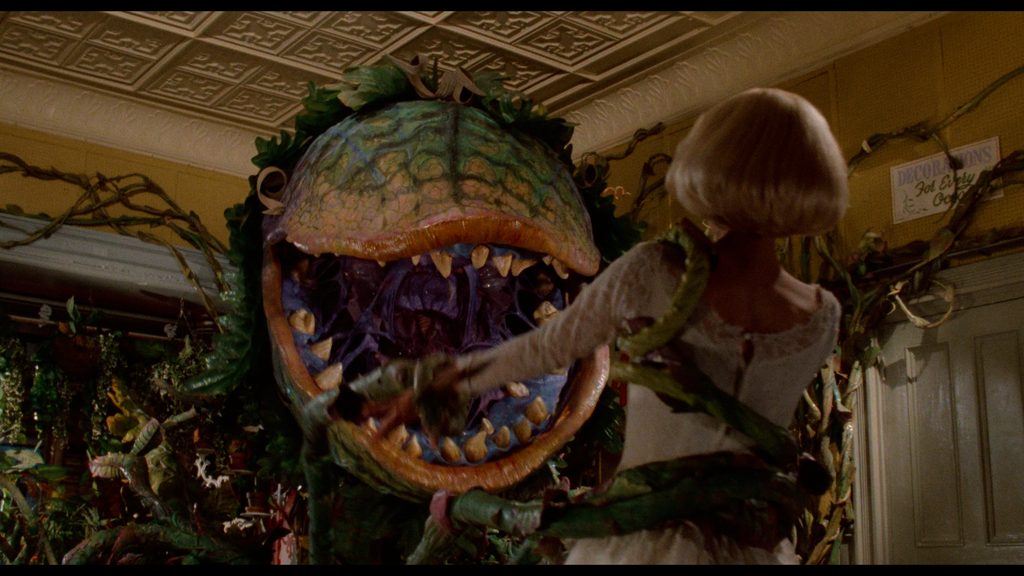
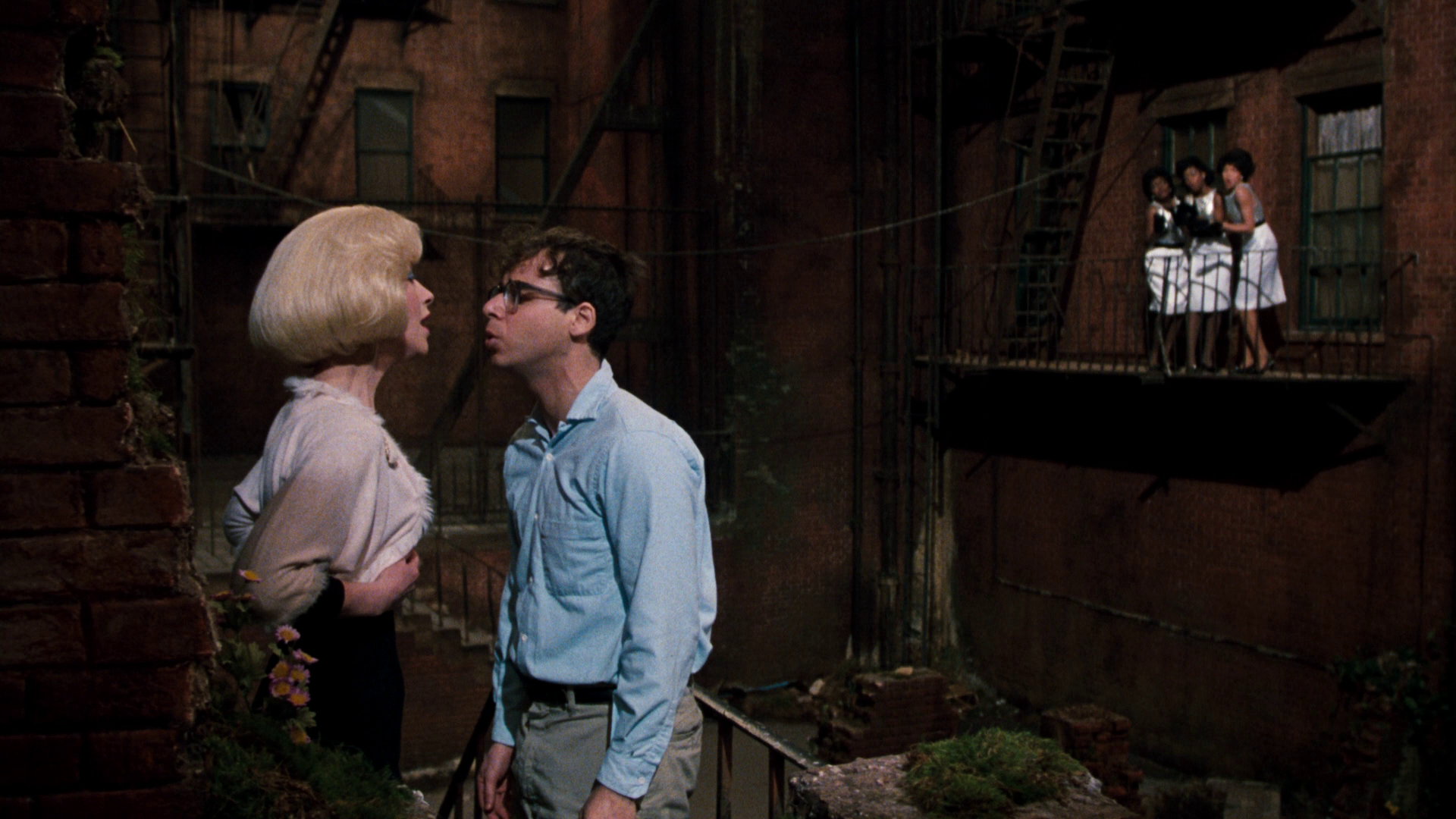
When I was about seven years old, I remember channel surfing on my grandmother’s television (she had cable; my parents couldn’t afford it) and came across a scene with a blond woman and a talking plant monster. It captivated me, and I watched until he tried to eat her, then quickly changed the channel, believing I was watching something I shouldn’t have seen at my age.

Image © 1986 Warner Bros. Entertainment Inc. All rights reserved.

This was my earliest exposure to Little Shop of Horrors, which has since become a favorite of mine and essential viewing around the Halloween season.

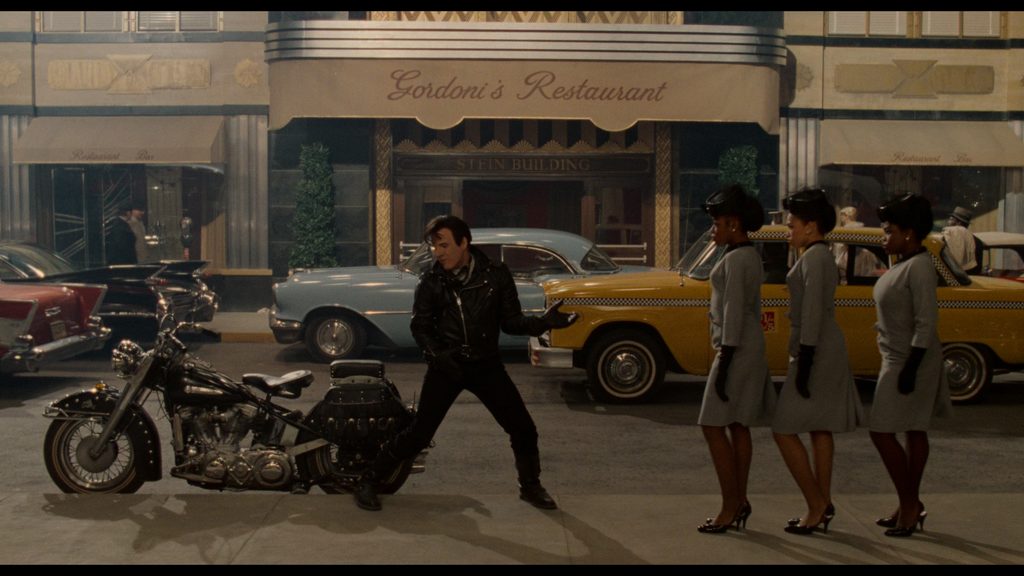
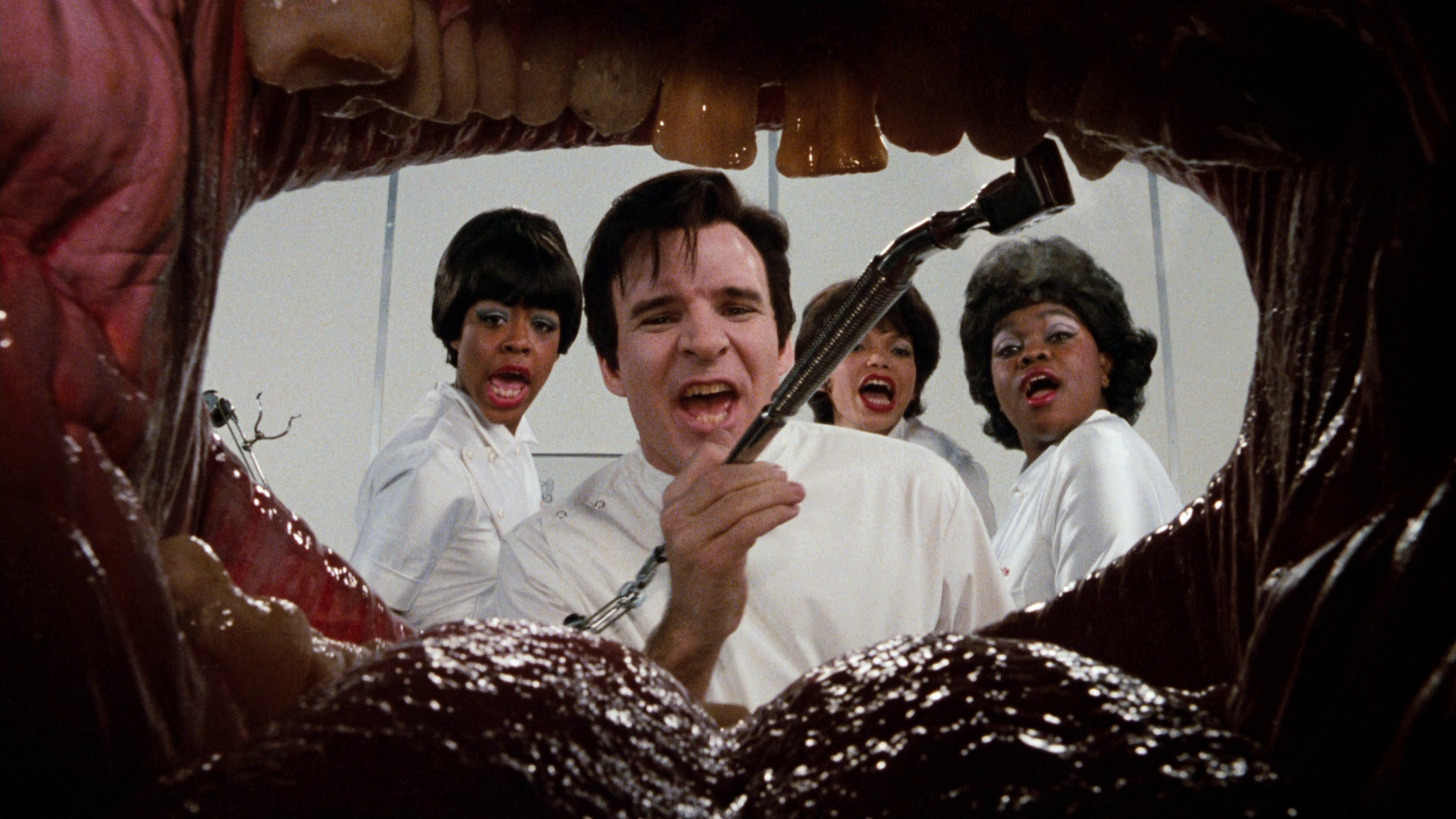
Based on the Broadway musical by Howard Ashman and Alan Menken – which was inspired by the 1960 film by Roger Corman – Frank Oz’s adaptation is a delightful, tongue-in-cheek comedy horror musical, boasting a stellar cast of Rick Moranis (Ghostbusters, Spaceballs), Ellen Greene (who reprises her role from the stage production), and the scene-stealing Steve Martin (The Jerk, Three Amigos).

Image © 1986 Warner Bros. Entertainment Inc. All rights reserved.

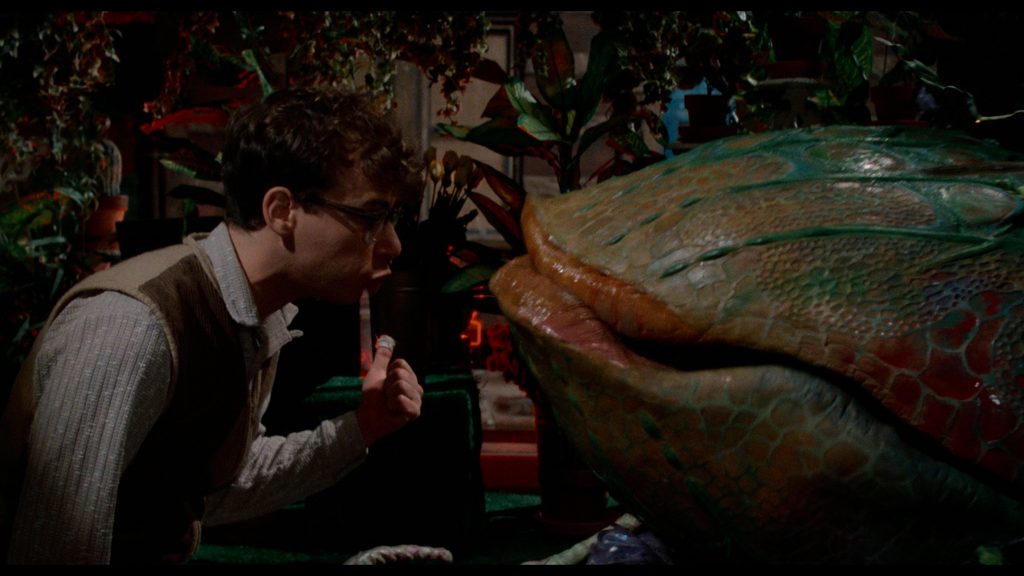
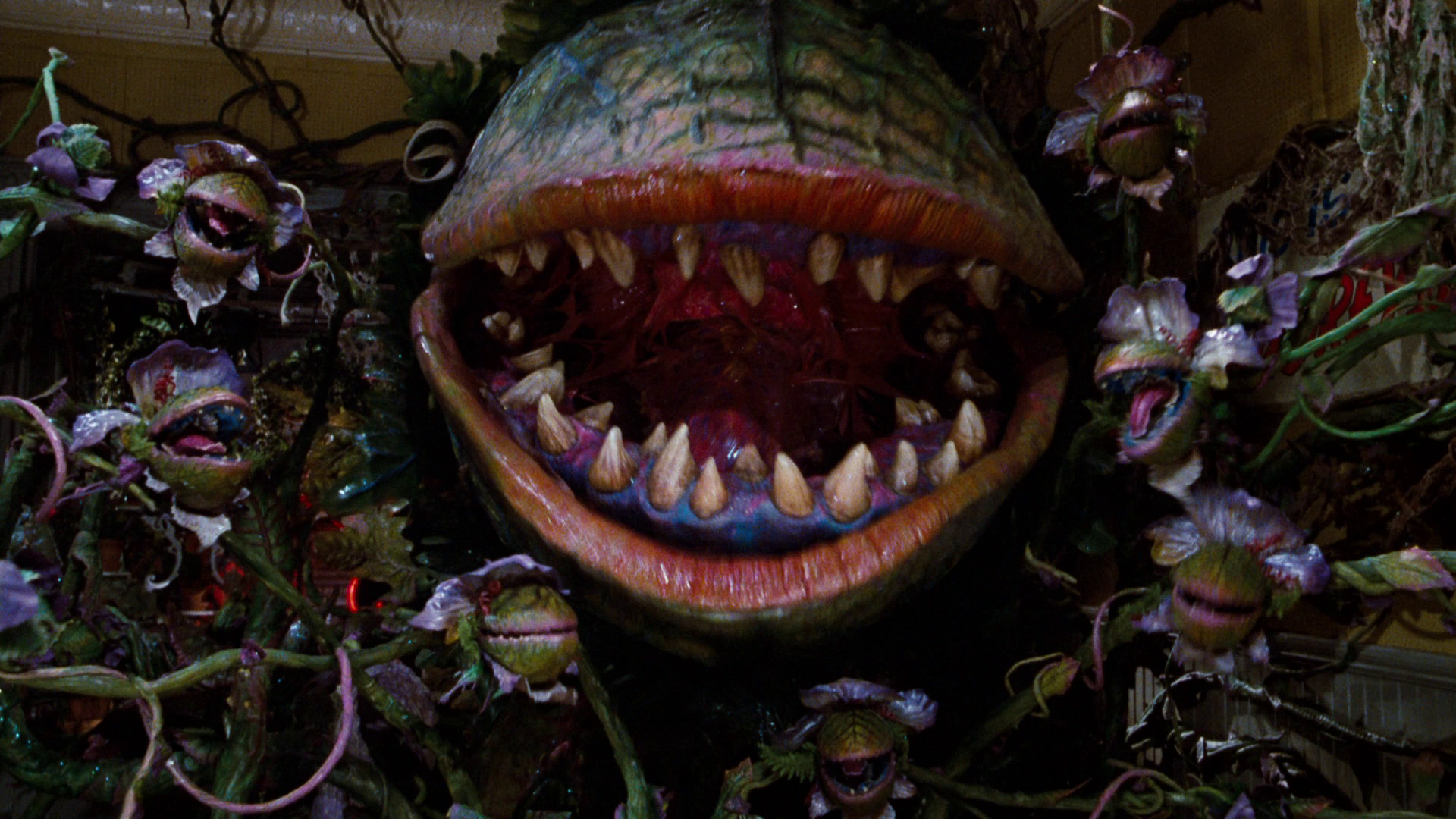
Its breakout star, however, is Audrey II, a carnivorous plant monster (voiced by Levi Stubbs) that remains, to this day, one of the most impressive puppets in film history. Forty years later, it still floors me how realistic the movements are, how accurate the lip sync is, and how larger-than-life it looks on screen.

Image © 1986 Warner Bros. Entertainment Inc. All rights reserved.

Little Shop has continued to enjoy a dedicated cult following, and for the first time, Warner Bros. Home Entertainment has released the 1980s classic on 4K UHD.

Packaging – 2/5

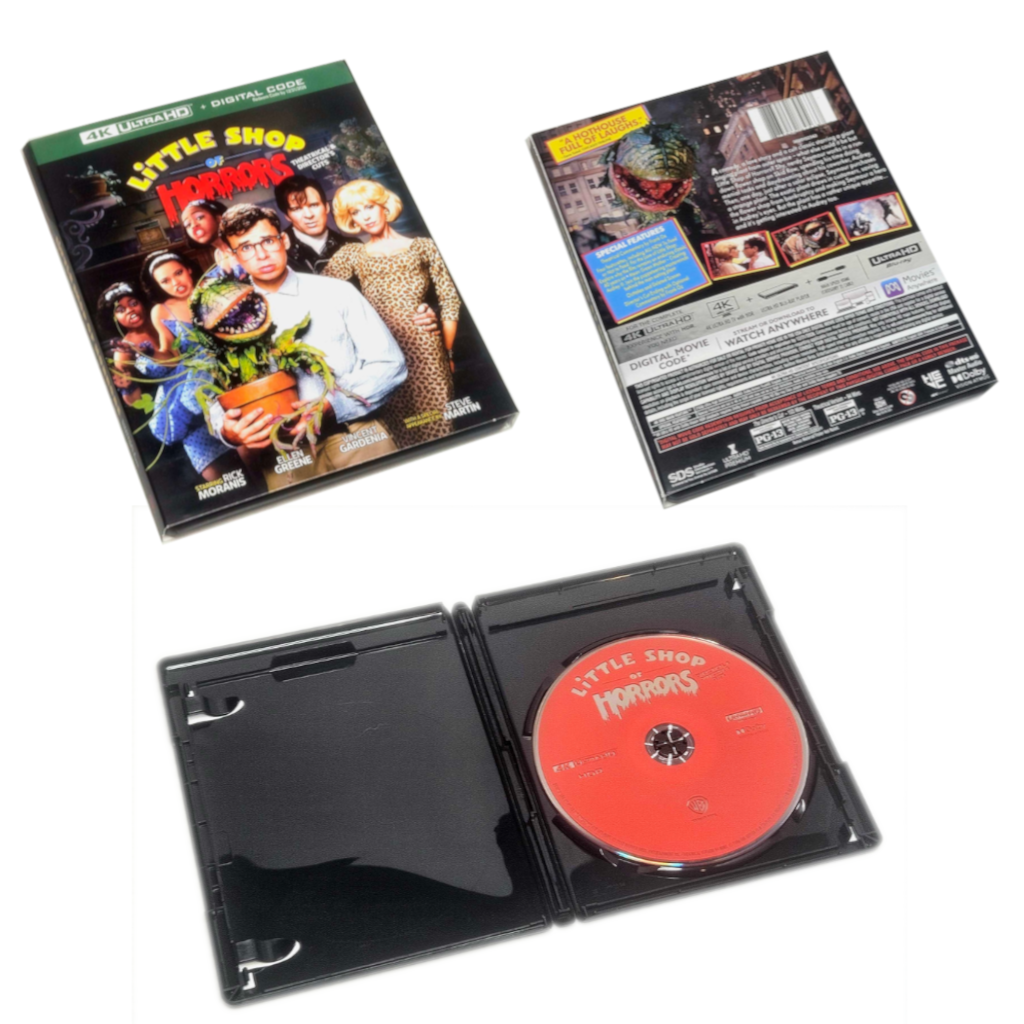
This edition of Little Shop comes in a standard amaray 4K UHD case. The first pressing includes an O-ring slipcover. A digital copy code pamphlet is included.

Cover art is uninspired. I don’t care for the “collage of cast members” style many new releases of older films use. The original theatrical poster would have been a far better choice; it’s iconic and more striking than the unsightly abomination plaguing this cover.

Video Quality – 5/5

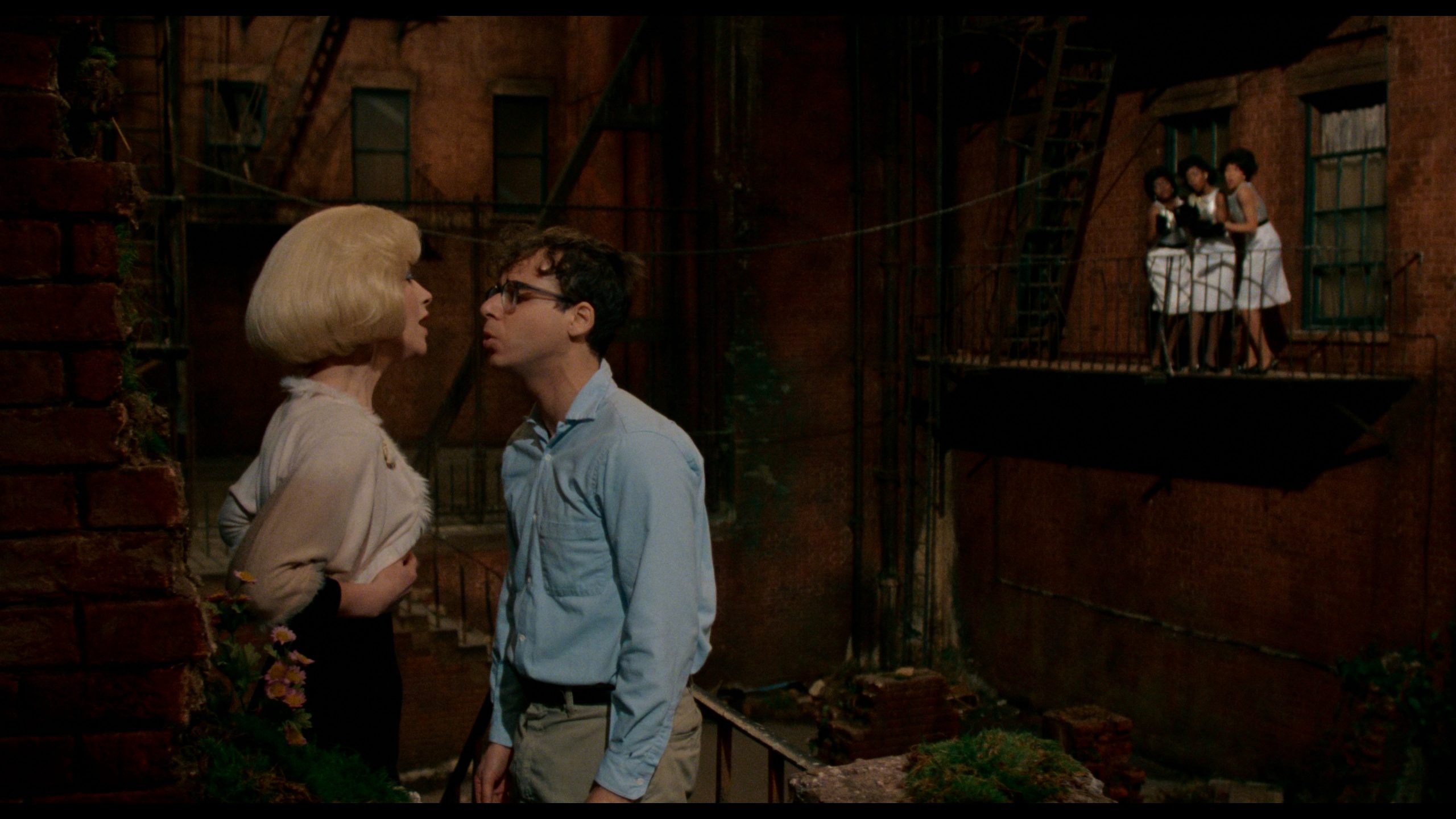
Presented for the first time in 4K, this new restoration is gorgeous. Details are crisp, and the HDR is rendered beautifully, providing a rich viewing experience and the best it’s ever looked.

The 4K screenshots do not accurately represent the HDR and should only be considered for comparing detail and aspect ratio improvements.


A major upgrade from the original 2012 Blu-ray is the aspect ratio, which has been corrected to the proper 1.85:1 rather than the 1.78:1 featured on the old release.

No Blu-ray copy is included, but the 4K disc is Region Free.

Audio Quality – 5/5

One of the biggest improvements over the 2012 Blu-ray is the inclusion of the film’s original theatrical stereo mix in DTS-HD Master Audio, which was frustratingly absent in the previous release. For more immersive sound, both cuts have been remixed to include Dolby Atmos and Dolby TrueHD 7.1 Surround Sound mixes, which sound phenomenal and are especially powerful during the movie’s many musical numbers.

The theatrical cut also includes Spanish and French audio tracks.

English, Spanish, and French subtitles are also included.

Special Features – 5/5

This new edition includes all the extras from the original 2012 Blu-ray release, plus two brand-new features exclusive to this reissue.

  • Audio Commentary with Director Frank Oz for the original theatrical version
  • To Feed or Not to Feed: For the Love of Little Shop – A new retrospective featurette featuring interviews with Frank Oz and Ellen Greene
  • Mean Green Mother: Creating Audrey II – A new featurette focusing on the creation of the Audrey II puppet featuring interviews with Frank Oz, Ellen Greene, Bran Ferren, and Richard Conway
  • Frank Oz and Little Shop of Horrors: The Director’s Cut – a discussion centered on the film’s original ending with Frank Oz and Richard Conway
  • A Story of Little Shop of Horrors – an archival 1987 promotional documentary chronicling the history of Little Shop from the original Roger Corman film, the Broadway musical adaptation, and the film adaptation of said musical, featuring interviews with Roger Corman, David Geffen, Frank Oz, Rick Moranis, and Ellen Greene
  • Deleted Scenes and Outtakes – with optional commentary from Frank Oz
  • Director’s Cut Ending – with optional commentary from Frank Oz

Overall Thoughts

Forty years after its original release, Little Shop of Horrors still holds up as a thoroughly entertaining musical and a technical marvel of puppetry. This new release is the definitive way to experience this cult classic. With an outstanding restoration, incredible sound, and plenty of supplemental material to satisfy dedicated fans, this is a worthwhile upgrade.

The Amazing World of Gumball was unlike any show airing in the 2010s. It combined every possible animation style into a single world, paired with some of the smartest, wittiest comedy to create one of the funniest and most artistically unique animated sitcoms.

Image © 2011 Cartoon Network/Warner Bros. Entertainment Inc. All rights reserved.

The series follows the day-to-day lives of the Wattersons, a lower-middle-class family consisting of the titular Gumball, the confident but naïve oldest son; Anais, the younger sister and the family’s voice of reason; Darwin, the optimistic adopted goldfish brother; and their parents, Nicole, the strong-willed mother, and Richard, the oafish father. Along with a plethora of colorful supporting characters, they find themselves in bizarre situations that provide absurd laughs, sharp satire, and social commentary.

Just in time for its 15th anniversary, Warner Bros. Home Entertainment has released the entire series run on DVD, available today.

Image © 2011 Cartoon Network/Warner Bros. Entertainment Inc. All rights reserved.

Packaging – 1/5

As with many “complete series” home video releases, Gumball comes packaged in an Epik Pak DVD case, with all 15 discs held in a flip tray that is not attached to the inside. This abhorrent design has been a nuisance for collectors for nearly a decade and has become the unfortunate standard whenever a new sizeable television series collector’s set is released from one of the major studios.

While the case itself is lackluster, the graphic design is excellent. Featuring a slipcover with newly commissioned artwork and vibrant colors, it’s a superb reflection of the show’s bright aesthetics and eclectic style.

Photography by Tyler Dell’Isola

Video Quality – 1/5

Unsurprisingly, when you condense a high-definition show onto a DVD with a maximum file size of 8.5 GB per disc, it’s going to look bad. And it does. The usual suspects of compression artifacts and downscaling are present, and a show as visually demanding as Gumball deserves better image presentation.

Image © 2011 Cartoon Network/Warner Bros. Entertainment Inc. All rights reserved.

The episodes are also in complete disarray, neither in production nor broadcast order, seemingly just random. You have episodes in the wrong season, such as The Stories on the final disc of season four, when it should be on the first disc of season five, or episodes rearranged within their respective seasons, like The End being played first, when it should be (ironically) The DVD. Gumball has a history of this, especially on streaming services, and it’s deeply disappointing that it was not corrected for this release.

Image © 2026 Cartoon Network/Warner Bros. Entertainment Inc. All rights reserved.

Many keen listeners will immediately notice the opening theme song, which plays at a slower pitch than usual. This is another point against the DVD format, since Gumball is produced in the UK, which uses the PAL encoding rather than the NTSC encoding used for North American DVDs. Due to these restrictions, Gumball cannot be presented accurately on DVD without conversion. Using Blu-ray would have eliminated this problem, as the format supports various frame rates, including the PAL standard 25 fps, across all regions.

Audio Quality – 3/5

Conversely, the audio quality in this release is better. Included is a Dolby Digital 5.1 Surround Sound mix for the series, which provides decent immersion when watching an episode. Even though an uncompressed lossless audio track on Blu-ray would have been a vast improvement overall, the current option is acceptable.

Closed captioning is also provided for each episode.

Special Features – 0/5

None. There are absolutely no bonus features of any kind included. No commentaries, no behind-the-scenes, no interviews, not even any trailers or promos. Zilch.

Overall Thoughts

This is a massive misfire across the board. Mediocre video resolution, abysmal quality control, substandard packaging, and lack of substance, all for the price of $69.99. Yes, it’s great that all of Gumball is available to own physically, but a show with such a dedicated fanbase and critical acclaim should be treated with more prestige. If you’re still considering picking it up, wait until it drops to around twenty bucks.

As a fan of the Gothic works of Edward Gorey, Tim Burton, and the Quay brothers, the macabre aesthetic of Over the Garden Wall immediately piqued my interest, especially when compared to the brighter, more colorful Cartoon Network productions airing at the time. Created by Patrick McHale (co-screenwriter of Guillermo del Toro’s Pinocchio), Over the Garden Wall is a richly told and enchanting folk comedy-horror story bursting with creativity.

Image © 2014 Cartoon Network/Warner Bros. Entertainment Inc. All rights reserved.

The story follows two brothers, Wirt (Elijah Wood) and Greg (Collin Dean), as they traverse a mysterious forest called The Unknown. Aided by a talking bluebird named Beatrice (Melanie Lynskey), they begin their quest to find their way back home, while encountering many strange and unusual inhabitants along the way.

Image © 2014 Cartoon Network/Warner Bros. Entertainment Inc. All rights reserved.

Along with gorgeous visuals and an engrossing story, Over the Garden Wall also features an incredible voice cast. Elijah Wood’s naturally earnest voice lends Wirt the appropriate level of vulnerability, helping him connect with the audience. Collin Dean’s performance as the naïve younger brother, Greg, is infectious and endearing. It’s the kind of sincerity you can only get from a genuinely sweet-sounding kid rather than an adult imitating one.

Alongside its leads, there’s a surplus of icons in supporting and guest roles, including John Cleese (Monty Python and the Holy Grail, Shrek 2) as both the wealthy magnate Quincy Endicott and the evil hag Adelaide; Tim Curry (The Rocky Horror Picture Show, Ferngully: The Last Rainforest), as Auntie Whispers; Fred Stoller (Everybody Loves Raymond, Dumb and Dumber), as the talking horse, Fred; and the standout performance: Christopher Lloyd (Back to the Future, Who Framed Roger Rabbit) as the Woodsman. His story is the most compelling, and Lloyd conveys the character’s tortured soul effectively with emotional weight and raw intensity, delivering one of the best performances of his illustrious career.

Image © 2014 Cartoon Network/Warner Bros. Entertainment Inc. All rights reserved.

In the years since its release, Over the Garden Wall has achieved a cult following, won an Emmy, and has become a traditional Halloween viewing for many. Now, for the first time ever, Warner Bros. Entertainment has released the entire series on Blu-ray.

Packaging – 3/5

This edition is packaged in a standard single-disc amaray Blu-ray case. No slipcover is included, and the cover insert is single-sided. It’s not the most prestigious presentation, but it’s serviceable.

Photography by Tyler Dell’Isola

Video Quality – 5/5

Over the Garden Wall’s signature warm autumn colors and tenebrism look stunning in high definition. There is great clarity in the details, like the painting textures of the backgrounds and crisp linework for the animation. With an average bitrate of 38.3 Mbps, this offers a superior viewing experience compared to streaming and a night-and-day difference from the previously available standard-definition DVD.

DVD
Blu-ray

DVD
Blu-ray

DVD
Blu-ray

Images © 2014 Cartoon Network/Warner Bros. Entertainment Inc. All rights reserved.

This release is Region Free.

Audio Quality – 4/5

Unlike the DVD, which contained Dolby Digital 5.1 surround sound, the Blu-ray offers a DTS-HD Master Audio 2.0 track. While DTS-HD offers a higher bitrate and lossless quality, it’s disappointing that it is limited to stereo rather than the immersive experience 6 channels would provide, especially for a show as atmospheric as this one.

English subtitles are also provided for the series, but are unavailable for the bonus materials.

Special Features – 4/5

All the included special features have been ported over from the original DVD release.

  • Behind Over the Garden Wall – A behind the scenes featurette with interviews from Patrick McHale, Elijah Wood, The Blasting Company, and more.
  • Original Pilot: Tome of the Unknown – The original 2013 pilot short presented in high-definition.
  • Alternate Title Cards – A short camera test for an alternate version of the show’s title cards.
  • Deleted Animatics – A collection of six scenes that were cut from the animatic stage.
  • Commentaries – Creator Patrick McHale and art director Nick Cross provide insight for every single episode.
  • Composer’s Cuts – Isolated music tracks for all the episodes.

It’s great that nothing was omitted during the transition to Blu-ray, but it feels like a missed opportunity not to include some new retrospective extras to commemorate the show’s tenth anniversary. Even just including the Aardman stop-motion short would have been nice.

Overall Thoughts

Over a decade later, Over the Garden Wall still remains as one of the greatest animated series ever made, and despite some minor oversights, this long-awaited Blu-ray release is still worth picking up. Add this to your collection, and be sure to throw it on every autumn for the best results.

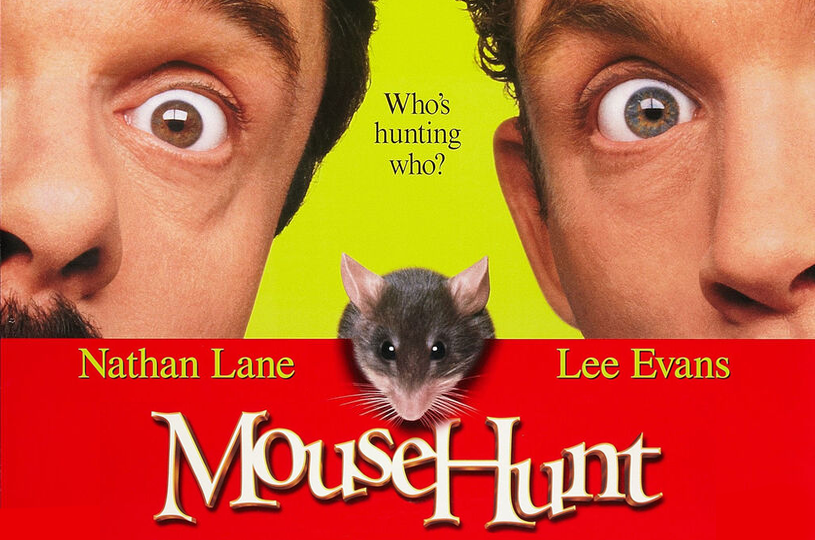
Before Gore Verbinski captivated audiences with the Pirates of the Caribbean franchise and before he won the Academy Award for Rango, his feature directorial debut was the financially successful yet critically divisive comedy Mouse Hunt. With a darkly comic script penned by Adam Rifkin (Small Soldiers, Detroit Rock City), led by the infectiously entertaining duo of Nathan Lane and Lee Evans, and with an unforgettable cartoonish performance from the legendary Christopher Walken, Mouse Hunt is the kind of absurdly unique film that deserves to be regarded as a cult classic.

Image © 1997 DreamWorks Pictures. All rights reserved.

Originally released by the then-new motion picture production company DreamWorks Pictures, Mouse Hunt was one of three of the studio’s debut feature films—along with the action thriller The Peacemaker and Steven Spielberg’s Amistad. Though I wasn’t fortunate enough to see Mouse Hunt during its initial theatrical release, my first experience came through a rental VHS copy. As an adolescent, I had a deep fondness for slapstick comedy. I’d watch reruns of Tom and Jerry on Cartoon Network, videotapes of The Three Stooges, and episodes of Rocko’s Modern Life on Nickelodeon. This style of physical comedy helped shape my sense of humor, and Mouse Hunt appealed directly to those sensibilities.

What sets Mouse Hunt apart from other family comedies of its time is Gore Verbinski’s decision to avoid making the film strictly for children. Famed author and scholar C.S. Lewis (The Chronicles of Narnia) once said, “A children’s story that can only be enjoyed by children is not a good children’s story in the slightest,” a sentiment that seems to align with Verbinski’s approach. The film’s atmosphere evokes the dark, dystopian tone often seen in the works of filmmakers Terry Gilliam and the Coen brothers, blending black comedy with physical humor with outstanding results, 

Seven years prior, Home Alone was a massive success at the box office, becoming the highest-grossing film of 1990 and one of the best-selling home video releases of its time. Its influence on Hollywood family comedies was undeniable—everyone wanted a piece of the McCallister pie, from Blank Check, Dunston Checks In, and even John Hughes’ own Baby’s Day Out. The model of a family comedy with cartoonish hijinks was seen as an easy buck. While Home Alone had set the bar, Mouse Hunt offers something darker and more nuanced, with a unique comedic style that takes it beyond the typical formula.

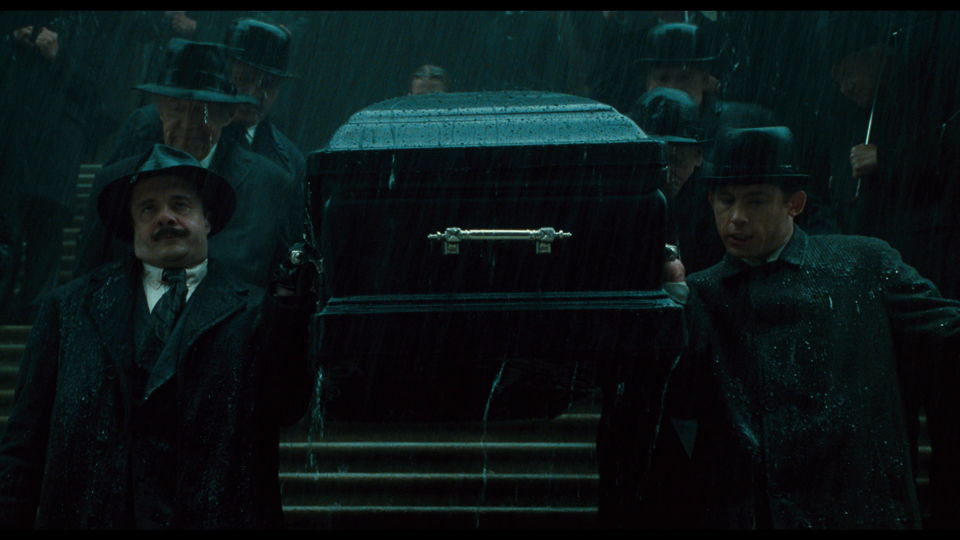
At first glance, it’s fair to assume that Mouse Hunt is just another Home Alone-inspired cash grab, but from its opening scene, it becomes clear that we’re in for something truly unique. Starting with a very cheerful setting: a funeral. The Smuntz brothers bicker over a trivial thing—Lars is wearing what Ernie considers a charcoal suit instead of the appropriate black. Mid-argument, a casket handle snaps, sending their father’s body tumbling down the church steps and straight into an open manhole. This over-the-top gag, set against the morbid backdrop, perfectly establishes the film’s distinct brand of dark comedy—one which will entertain adults while introducing younger viewers to a more twisted sense of humor.

Image © 1997 DreamWorks Pictures. All rights reserved.

While many notable names—such as Jim Carrey and Nicolas Cage—were considered for roles in the film, the casting of Nathan Lane (The Lion King, The Birdcage) and Lee Evans (The Fifth Element, There’s Something About Mary) proved to greatly benefit the film. Although bigger stars may have drawn a larger audience, Lane and Evans deliver a memorable on-screen dynamic that may have been lost had more recognizable faces been attached to these characters. Lane, a beloved stage and screen veteran with his larger-than-life personality and irresistible charm, portrays Ernie Smuntz with the appropriate amount of cynical wit to elevate the macabre humor. Paired with the domestically unknown Evans as his hapless, optimistic brother Lars, who delivers a brilliant rubber-limbed physicality, the film provides him with the ideal platform to showcase his exceptional physical comedy to new audiences.

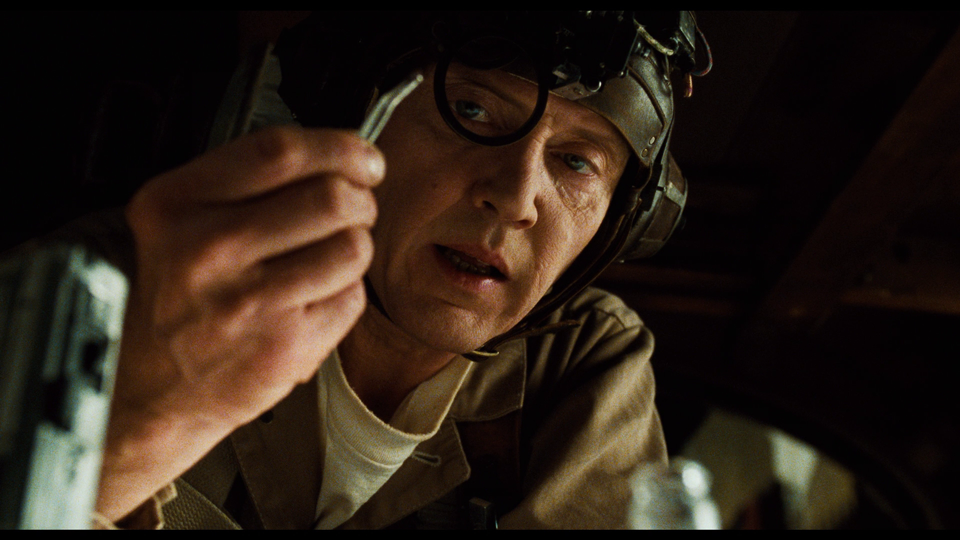
Complementing its lead duo, Mouse Hunt features an impressive supporting cast, including legendary character actor Michael Jeter (The Fisher King, The Green Mile) in the small but memorable role of architect historian Quincy Thrope; William Hickey (Prizzi’s Honor, National Lampoon’s Christmas Vacation) in one of his final film roles as the string magnate and brothers’ father, Rudolph Smuntz; and, most notably, Christopher Walken (The Deer Hunter, Pulp Fiction) as the scene-stealing, eccentric exterminator, Ceaser. While each actor brings a zany, idiosyncratic appeal to their performances, Walken’s earnest portrayal of the unhinged pest-control expert is easily the standout. Much like his unforgettable appearance in Annie Hall, his reserved tone while delivering such insane dialogue creates an excellent contrast, amplifying the comedy and making every line hit with big laughs.

Image © 1997 DreamWorks Pictures. All rights reserved.

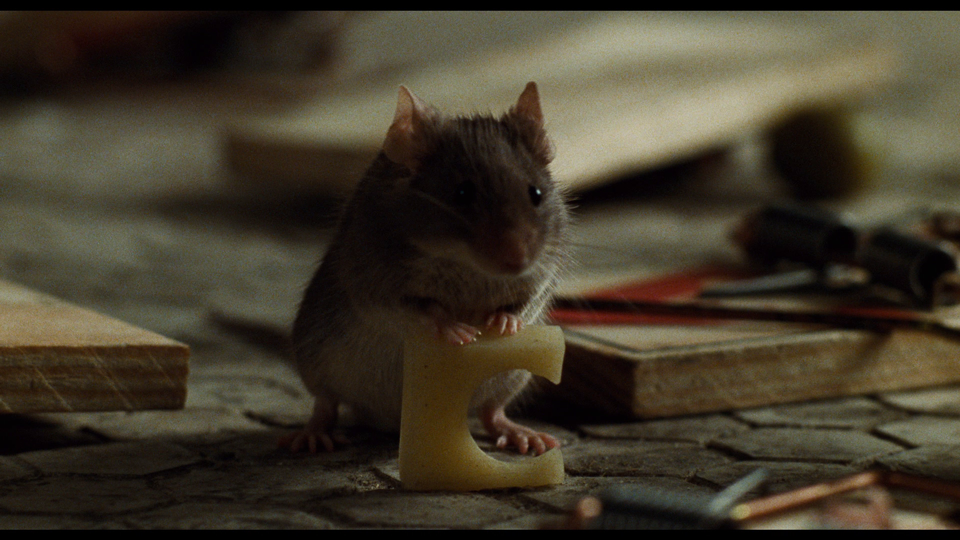
Of course, the true star of the film is the mouse itself. Brought to life through a combination of trained animals, computer animation, and animatronic puppets created by Stan Winston Studio (Jurassic Park, Terminator 2: Judgement Day). Winston’s team—which included Shane Patrick Mahan (Iron Man, The Shape of Water) and Paul Mejias (The Avengers, Pacific Rim)—applied the same level of masterful craftsmanship as seen in their other works to the rascally field mouse with an impressive, anthropomorphic quality that brings to mind the lifelike puppetry seen in Babe, an apt comparison as the same visual effects house, Rhythm and Hues Studios, worked on both films.

Image © 1997 DreamWorks Pictures. All rights reserved.

A few critics at the time took issue with the titular mouse’s lack of a defined personality. Roger Ebert referred to him as “simply an ingenious prop,” while Adrian Martin (in a substantially more positive review) noted that he was “imbued with very little character.” While these critiques are understandable, they overlook the purpose the mouse serves in the story. The mouse isn’t meant to be a fully realized character with an arc; rather, he serves as the catalyst that helps the brothers confront their shortcomings and grow.

In a 1998 interview with Film 98 Report, Verbinski stated, “I don’t really see ‘the mouse’ as having an arc. He’s more of a monk. He’s the same mouse at the beginning of the movie as he is at the end of the movie; the brothers have changed pretty radically. But he’s sort of there to teach them a lesson.” Verbinski’s methodology presents the mouse as less of a character and more of a force of nature. His narrative simplicity is a deliberate and essential element of the film’s core themes of personal growth.

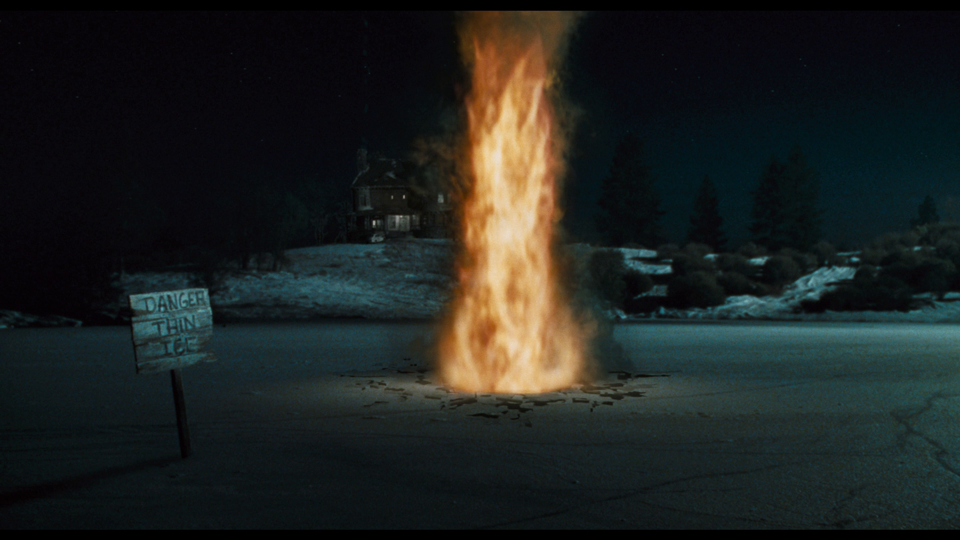
The meticulously crafted framing of cinematographer Phedon Papamichael (Walk the Line, A Complete Unknown) utilizes the kind of composition reminiscent of the works of Chuck Jones to enhance a gag. In the scene where Ernie is stuck in the chimney after he’s shot out like a cartoon character, the camera slowly pans to a shot of the frozen lake, complete with a “Danger Thin Ice” sign to further hilarity. The precise pacing of this scene reinforces the playful but chaotic tone of the film, reminding you to accept the absurd logic and simply fall back and laugh.

Image © 1997 DreamWorks Pictures. All rights reserved.

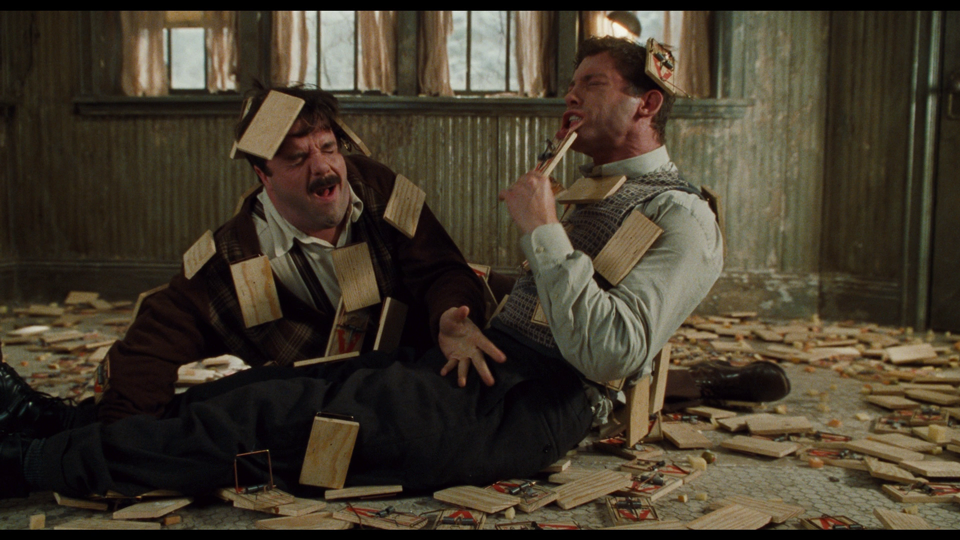
There are plenty of sight gags throughout, but one of the most memorable is the famous kitchen mousetrap scene. In a desperate attempt to finally catch the mouse, Ernie and Lars set up an excessive number of mousetraps in their kitchen. After foolishly cornering themselves, they are forced to spend the night there, watching in disbelief the next morning as the mouse narrowly avoids every trap. As the mouse makes its way to the top of the fridge, it launches a cherry, triggering a chain reaction that sets off every mousetrap in the room. The brothers scream and flail in panic as the traps snap around them. This moment of pure, chaotic hilarity serves as the film’s comedic centerpiece, and the studio must have thought so as well, given its inclusion in the theatrical trailer and every television advertisement.

Image © 1997 DreamWorks Pictures. All rights reserved.

Masterful composer Alan Silvestri (Back to the Future, Who Framed Roger Rabbit) orchestrates a magnificent arrangement of whimsical and humorous tunes that complement the film’s absurd, cartoonish antics. The ingenious use of percussion instruments to mimic the scurrying of a mouse, paired with the buffoonish brass that reflects the male leads’ incompetence, amplifies the mischievous energy of its star, perfectly enhancing the madness on screen.

A key element of a film score’s quality is its memorability—whether through an iconic track or a hummable motif that lingers in your mind as the credits roll. Silvestri has crafted a plethora of unforgettable movie themes, from the triumphant fanfare of Back to the Future to the somber nocturne of Forrest Gump; Mouse Hunt is no exception. Its “Mouse Theme” leitmotif, a playful tune that recurs throughout the soundtrack, gives the film a musical identity filled with decadent, childlike whimsy.

One of the notable ways Mouse Hunt pays loving tribute to its vaudevillian ancestors is with its anachronistic setting. Through an eclectic mix of fashion and automobiles spanning the 1940s to the 1990s, production designer Linda DeScenna (Blade Runner, Galaxy Quest) and costume designer Jill M. Ohanneson (Bill and Ted’s Excellent Adventure, Firefly) create a magnificent vintage aesthetic evoking a nostalgic lens that honors its cinematic ancestors while remaining accessible to younger audiences.

With all the laudable qualities the film possesses, it’s a shame it hasn’t enjoyed the kind of enduring legacy shared by other iconic comedies of its time—or the bygone era it pays tribute to. From a distance, Mouse Hunt may appear as a critical flop that never quite escaped the shadow of late ‘90s family films. However, there’s much more to appreciate in this movie than meets the eye. It is an outstanding debut for a visionary director, boasting a stellar cast of comedic talent, complemented by a unique script and a majestic musical score. These elements combine to create an unforgettable, laugh-out-loud romp that will entertain children and adults alike.

Image © 1997 DreamWorks Pictures. All rights reserved.

As the landscape of comedy films has become a sterile sea of uninspired, shot-reverse-shot structures filled with comedians ad-libbing through their scenes, we need more movies like Mouse Hunt to serve as harbingers of classic-style comedies for new audiences. Hundreds of Beavers did this to great success, but I hope more will rediscover Mouse Hunt and recognize it for the avant-garde farce it always was.

Buy Here!